05 March 2010

those wacky libertarians again

Great article from Ron Paul:


For some reason, people get really worked up whenever libertarianism is mentioned, but I think that's mostly because it's highly misunderstood. People hear the usual media interpretation of it and don't really dig deeper. Libertarianism is pained as a wacky, utopian, simplistic "theory" that is not only going to cause mass starvation and poverty, but is just not realistic or workable. Truth is that libertarianism is more subtle and nuanced than most people have the time to discover.

04 March 2010

time to end another monopoly

Postal Service Urged to Weigh Three-Days-a-Week Mail

Now's a good a time as any to end the ridiculous monopoly granted to the US Postal Service over mailboxes and non-urgent mail. Any company that can't make a money with such juicy exclusivity doesn't deserve to exist. Of course, it'll never happen because they'll have to let go some of their bloated workforce and that won't help people get re-elected.

Where's Lysander Spooner when you need him?

20 February 2010

ron paul still unelectable

Even after garnering more than 1 million votes in the 2008 primaries and raising more than any other candidate, Ron Paul was almost universally derided as unelectable. Fast forward to this year's Conservative Political Action Conference, a huge event that attracts members of Congress, college political activists, former Presidents, and other political bigwigs.

The last three years, Mitt Romney won their "straw poll" of roughly 4,000 attendees and he was loudly proclaimed as the likely Republican front-runner for the 2008 election.

This year, there was a surprise:

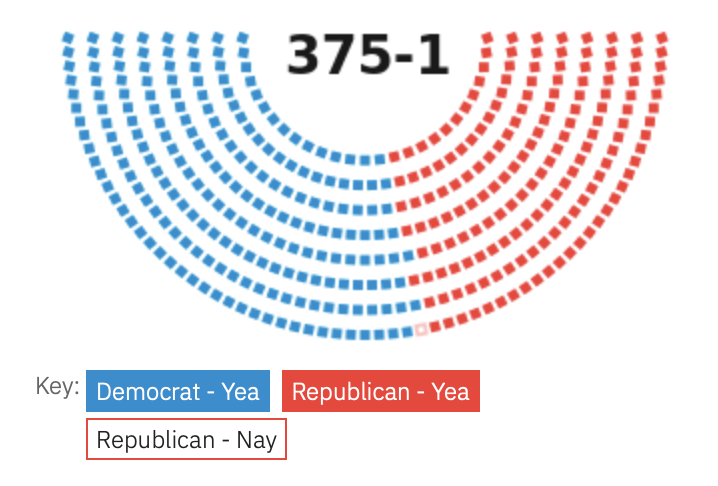
Rep. Ron Paul surprise winner of CPAC straw poll

Unsurprising was CNN's usual dismissive take on it:

"The announcement of Paul's win, a surprise victory unlikely to have a major impact on the 2012 presidential contest".

If it were Mitt Romney or Sarah Palin, it would have been a harbinger, but since it was Ron Paul, it's insignificant. The same group of people that usually attend this conference every year only have significance if they vote for who the media wants them to vote for.

I hereby give CNN a honorary Screw You.

18 February 2010

retroactive war for oil

The Falklands War in 1982 always seemed very suspicious to me. I re-read the Wikipedia page recently, searching for something relating to oil or gold or some precious resource that someone must have found and wanted to seize by force under the guise of a humanitarian mission (sound familiar?).

Well, shockingly, there may be huge reserves of oil around the Falkland Islands! Wonder how long it'll be before the news comes out that this was already known way back in 1982:

Gordon Brown says UK is prepared in Falkland Islands

The money quote: "We have no doubt about our sovereignty over the Falkland Islands and we're clear that the Falkland Islands government is entitled to develop a hydrocarbons industry within its waters."

Clearly, the rights of a country to develop a hydrocarbons industry clearly outweighs the rights of people in dozens of countries in the world living under brutal military regimes (usually put in place and funded by the UK and US).

29 January 2010

at least he knows what's wrong with political discourse

I have to give Obama credit for having an amazingly keen understanding of what's wrong with political discourse in this country (and the role the media plays is amplifying it):

http://www.huffingtonpost.com/2010/01/29/transcript-of-president-o_n_442423.html

It was also nice to see support for a line-item veto, something that's been long overdue. I don't agree with either party on much of anything, but this was a pretty refreshing video to watch anyways.

23 January 2010

steal this idea #2: pay to browse in silence?

So, this idea is for Google to steal as I don't think anyone else is positioned to do this. This came to me in a dream, which means it's either brilliant or completely stupid. The basic question here is:

Would you pay money to browse the web in silence (i.e. no ads, whether they be static text, animated, popping up or under, changing the size of your window, blinking, or worst of all, making sound)?
First off, I want to acknowledge that I know there is ad blocking software, but it's not 100% effective as there is always an arms race between ad blockers and advertisers. Plus, it can falsely block content you care about (this is especially true with popup ad blocking). And finally, some great sites are ad supported and it would be a shame to take their livelihoods away from them.

So, given there are enough people that answer YES to my question, here's what Google could do. Come up with some sort of monthly or yearly fee for "browsing in silence". When logged into your Google account, this would get you Google search results without the noise for starters, but the biggest part would be silent web browsing to every website you visit. So, how could that possibly work?

Well, Google could offer a program to pay websites (using some of the fee you are paying them) to deliver a silent version of their website. It would basically work exactly like AdWords (getting paid per "click thru") but you'd be getting paid for delivering a silent version of the website to one of Google's customers, who would get to the sites either by clicking on a Google search result or just visiting any site at all (this would require some sort of Google proxy server).

I think sites would be interested, because they have to know that people that go to the trouble of installing and maintaining ad-blocking software, with all the problems it can have, are really unlikely to ever click on ads, so here's a way to make money on people that would never click on your ads in the first place.

Would it work? Well, the biggest problem is the chicken and egg problem. The first user to sign up would basically only get ad blocking on Google's site itself and would have to wait for sites to start signing up. Google could potentially subsidize the service for starters, making it free to all Google account holders, while making "NoAdWords" payments to websites to get the ball rolling. I suspect the biggest and most important sites would jump on board the quickest, so potentially it wouldn't be long before a good percentage of the web were available in a silent version.

Google could also investigate ad blocking through their proxy server as a stopgap, but that would probably piss off their advertisers immensely! It would almost be a form of blackmail.

In any event, could it work?

20 January 2010

wealth now, philanthropy later

Seeing this latest monument to Bill Gates' ego reminded me of one of the best sentences I've read that describes why I dislike everything he stands for:

"Wealth now, philanthropy later" is an inappropriate response to the challenges of the 21st century.
It has long bothered me that born-again philanthropists are lauded for their contributions for society, while ignoring all the suffering they caused and their complete ignorance of their effect on the planet until they got old enough to start being concerned about their legacy.